
Getting maximum horsepower from your engine requires more than just installing high-performance parts. Proper carburetor tuning plays a major role in how efficiently your engine delivers power. An Edelbrock carburetor is popular among racers and performance enthusiasts because of its reliability, simple design, and easy adjustability. When tuned correctly, it can improve throttle response, fuel delivery, and overall engine performance.
The first step in tuning an Edelbrock carburetor is ensuring the engine itself is in good condition. Ignition timing, spark plugs, fuel pressure, and vacuum lines should all be checked before making carburetor adjustments. A poorly maintained engine can make carburetor tuning difficult and lead to inaccurate results.
Start by setting the idle mixture screws. Warm up the engine to operating temperature and connect a vacuum gauge if possible. Turn each idle mixture screw slowly until the engine reaches the highest and smoothest vacuum reading. This adjustment helps optimize the air-fuel mixture at idle and improves throttle response when accelerating.
Next, inspect the float levels inside the carburetor. Incorrect float settings can cause fuel starvation or excessive fuel delivery. Edelbrock carburetors typically have recommended float height specifications that should be followed carefully. Proper float adjustment ensures the engine receives a steady and consistent fuel supply during hard acceleration.
Jetting is another important factor when tuning for maximum horsepower. Carburetor jets regulate how much fuel enters the engine at different throttle positions. If the engine runs lean, it may hesitate or overheat. If it runs too rich, performance and fuel economy suffer. Edelbrock carburetors make jet changes relatively simple, allowing tuners to experiment with different jet sizes for optimal performance.
Metering rods also influence fuel delivery. These rods move according to engine vacuum and adjust the fuel mixture under load. Changing to thinner rods increases fuel flow and can improve power at wide-open throttle. Edelbrock provides calibration charts that help identify suitable combinations of jets and rods for different performance goals.
Another key adjustment involves the step-up springs. These springs control when the metering rods rise during acceleration. Stronger springs activate enrichment sooner, which can improve throttle response in aggressive driving conditions. Selecting the correct spring depends on engine vacuum characteristics and driving style.
Accelerator pump tuning is equally important for quick throttle response. If the engine stumbles when the throttle is opened rapidly, the accelerator pump may need adjustment. Edelbrock carburetors feature multiple pump linkage holes that change the amount and timing of fuel delivery. Testing different positions can eliminate hesitation and improve acceleration.
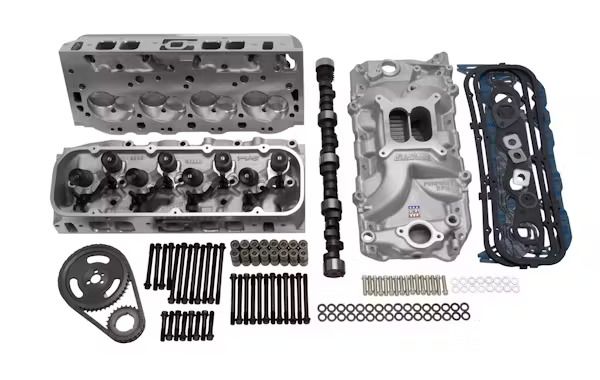
Airflow also affects carburetor performance. A clean high-flow air filter and properly matched intake manifold help maximize horsepower gains. Restrictive air filters or mismatched intake setups can reduce airflow and limit engine efficiency. Ensuring the carburetor receives cool, clean air improves combustion and overall power output.
After making adjustments, road testing or dyno testing is essential. Small tuning changes can have a significant impact on horsepower and drivability. Monitoring spark plug color, exhaust tone, and engine temperature helps determine whether the engine is running rich or lean. Fine-tuning should be done gradually to avoid damaging the engine.
Weather and altitude can also influence carburetor tuning. Engines operating at higher elevations generally require leaner settings due to reduced air density. Similarly, seasonal temperature changes may require slight adjustments to maintain optimal performance. Regular inspection and tuning keep the carburetor performing consistently throughout the year.
For racing applications, tuning becomes even more precise. Performance camshafts, aftermarket cylinder heads, and upgraded exhaust systems often require custom calibration settings. Enthusiasts seeking maximum horsepower frequently combine dyno testing with careful carburetor adjustments to achieve the best possible results.
An Edelbrock carburetor offers excellent flexibility for street and racing engines alike. With proper tuning, drivers can unlock improved horsepower, smoother acceleration, and better overall engine responsiveness. Taking the time to adjust idle mixture, jetting, metering rods, and accelerator pump settings ensures the carburetor performs at its full potential while delivering reliable performance on the street or track.